Imagine growing older, and losing your safety in the place you should be safest.
For some people, elder abuse arrives suddenly – a shock, a betrayal, a family crisis that changes everything. For others, it builds slowly. A little more control over money. A little less say over decisions. A growing sense that it is easier to stay quiet than to object. Elder abuse can include psychological abuse, financial abuse, neglect, physical or sexual abuse, coercive control, social isolation, or being pressured into decisions that are not freely made. At its heart, elder abuse is a breach of trust.
It often occurs in families or close relationships. It can be hidden behind closed doors, disguised as ‘helping’, excused as family conflict – or missed because older people are not believed, not asked, or not given safe pathways to speak. This World Elder Abuse Awareness Day, on 15 June, COTA is asking Tasmanians to imagine something better – and then help build it.
Australia’s first National Elder Abuse Prevalence Study found that around one in six older people living in the community had experienced elder abuse in the previous 12 months. Psychological abuse was the most common form, followed by neglect, financial abuse, physical abuse, and sexual abuse. That is not a small or marginal problem. It is a major social, health, legal, and human rights issue.
For Tasmania, the challenge is especially urgent. We are an older state. In 2021, almost one in five Tasmanians was aged 65 or over, and our median age was 42, compared with 38 nationally. In some rural and remote parts of Tasmania, around one third of the population is aged 65 or over. An ageing population is not a burden. Older Tasmanians are workers, volunteers, carers, grandparents, community leaders, mentors, neighbours and friends. They contribute to our economy and to our communities in countless ways.
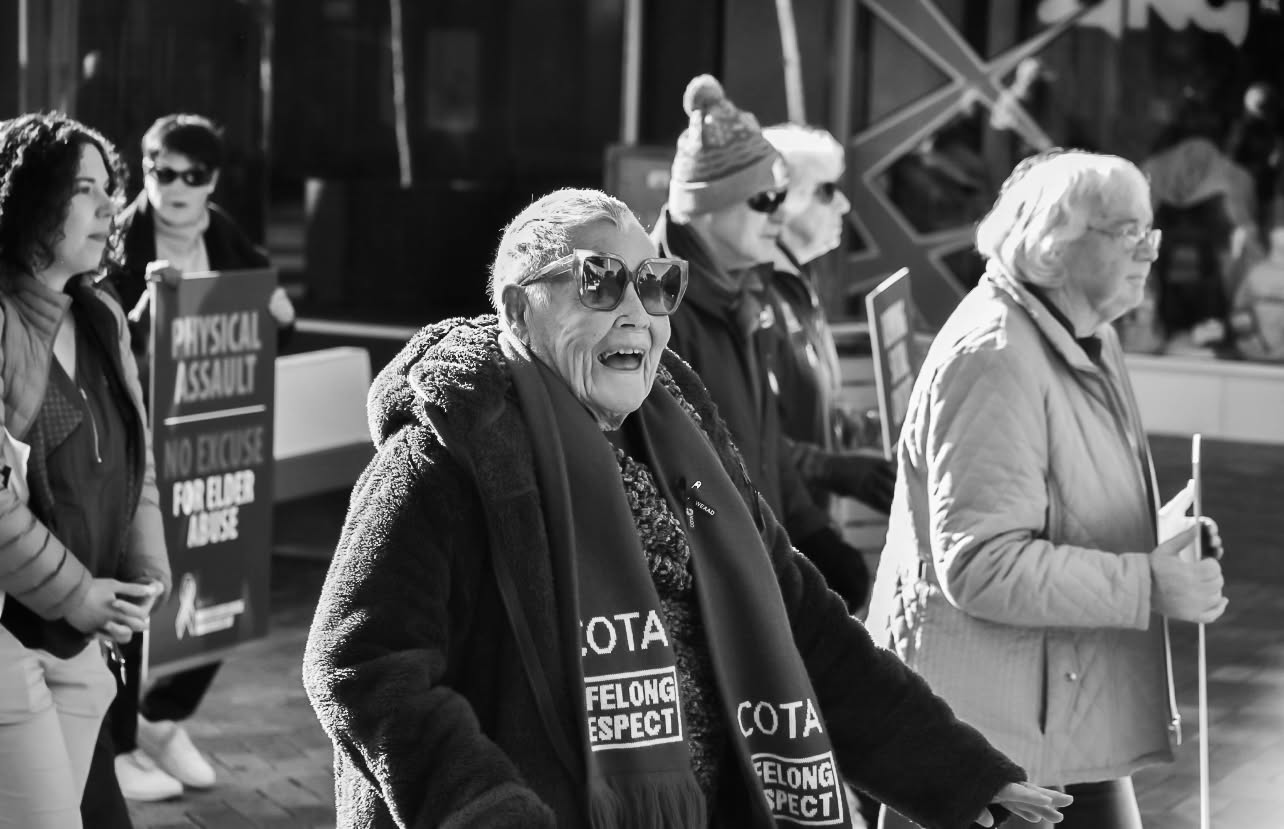
Lived Experience Advocate – Judy Guyton joining the WEAAD Walks 2025
But an ageing population does require us to be honest about risk – and prepared to respond. The release this year of the National Plan to End the Abuse and Mistreatment of Older People 2026–2036 is an important step. The Plan sets a vision that all older people should be safe, valued, heard and respected; have their rights protected and promoted; and live free from abuse and mistreatment.
That vision matters. But vision alone will not keep older Tasmanians safe. The National Plan must be matched by practical, sustained and properly funded action – across prevention, early intervention, specialist support, legal assistance, health services, housing, aged care, family violence responses, financial institutions and community education. There have been welcome commitments to specialist elder abuse services and a national prevention framework. But the scale of the issue demands more than short-term programs or fragmented responses. Services must be available regardless of postcode. That matters in Tasmania, where geography, transport, digital exclusion, housing stress, and small-community privacy concerns can all make it harder for older people to seek help.
We also need to talk about ageism. Elder abuse does not occur in a vacuum. It is made easier when older people are treated as less capable, less credible, less valuable, or less entitled to make decisions about their own lives. Prevention starts much earlier than crisis response. It starts in families, schools, workplaces, services, and communities. It starts with the simple principle that every person, at every age, has the right to dignity, autonomy, safety and respect.
It also requires systems that listen to older people – including those with lived experience of abuse. Policies designed without older people will not be good enough. Services that are difficult to access, culturally unsafe, digitally inaccessible, or fragmented will not be good enough. Responses that treat elder abuse as someone else’s problem are not acceptable. Tasmania has an opportunity to lead by building a practical, rights-based, and community-wide approach.
That means investing in primary prevention. It means training frontline workers to recognise warning signs. It means strengthening legal and advocacy pathways. It means better coordination between health, aged care, family violence, police, financial, housing, and community services. And it means all of us being willing to ask uncomfortable questions. Is an older person being isolated from friends or family? Are they suddenly unable to access their own money? Are they being pressured, threatened, neglected or spoken over? Are decisions being made for them, rather than with them?
Imagine a Tasmania where older people are not afraid to speak. Where families know what respect looks like. Where services know how to respond. Where abuse is not minimised, hidden, or excused. Where older people are safe, heard, and believed. Young people today will, if they are lucky, become the older people of tomorrow.
What sort of Tasmania do we want them to inherit?
On World Elder Abuse Awareness Day, the answer should be clear: one where growing older never means becoming less safe, less valued, or less human.
Brigid Wilkinson
CEO
For information or support about elder abuse, call the Tasmanian Elder Abuse Helpline on 1800 441 169 9am-5pm Monday to Friday.
In an emergency, call 000.