
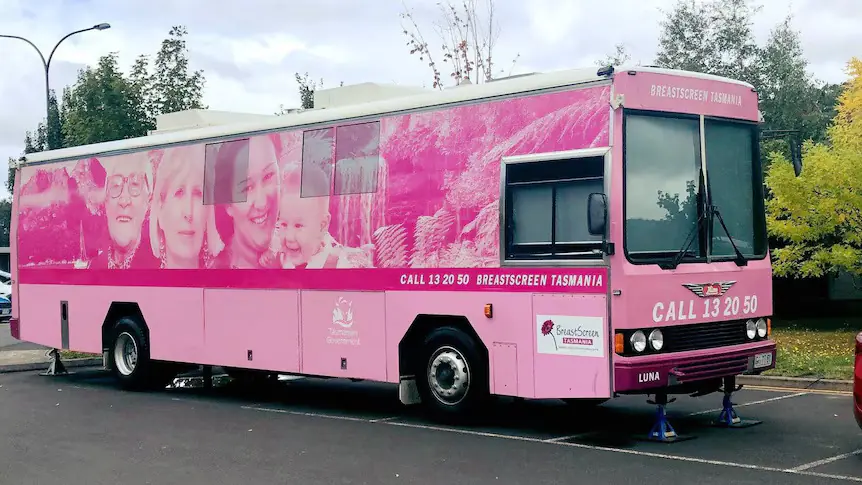
Older women and those living in rural and regional Tasmania are being unfairly impacted by ongoing disruptions to BreastScreen services, with COTA Tasmania and Women’s Health Tasmania calling for urgent action from the Tasmanian Government.
One of Tasmania’s mobile BreastScreen units, Luna, has been out of service since April 2025, with its replacement now reportedly delayed until December 2026. The state’s second mobile unit, Ida, has also recently experienced technical issues.
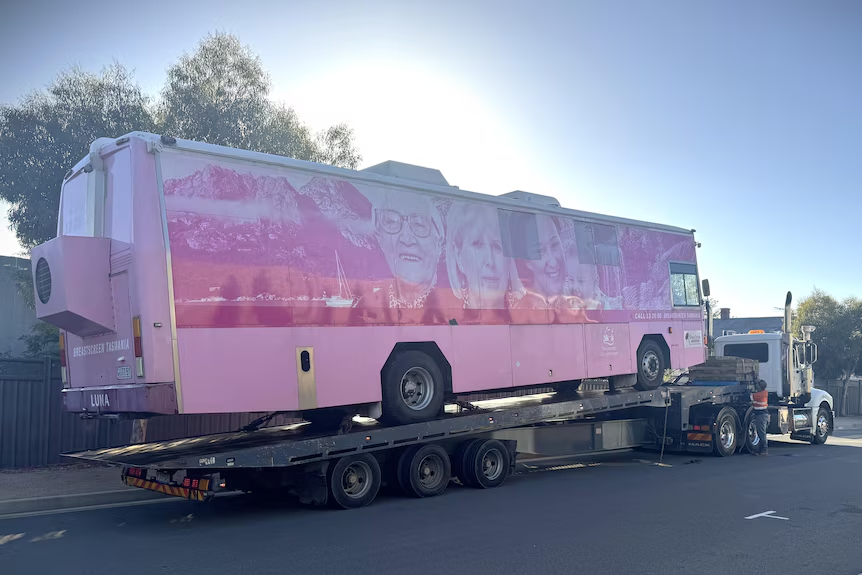
The Breastscreen Tasmania bus was declared unroadworthy, so it was delivered to locations on a flatbed truck. (Supplied: Kristie Johnston)
For many women in regional communities, mobile screening is not simply convenient. It is often the only realistic way to access routine mammograms.
Women’s Health Tasmania CEO Kelly Bruce said delayed access to screening could have serious consequences.
“Breast screening is a life-saving preventive health service. Delays in screening increase the risk that breast cancer will be diagnosed later, when treatment is more difficult, more invasive and more expensive,” Ms Bruce said.
COTA Tasmania CEO Brigid Wilkinson said many older Tasmanians face significant barriers to travelling long distances for healthcare.
“Cost, limited transport, mobility issues, caring responsibilities, and anxiety about driving can all make travel for healthcare extremely difficult,” Ms Wilkinson said.
While a fixed clinic in Devonport is expected to open next month, advocacy groups say that does little to address the immediate issue facing women in the North, North-West, East Coast and other regional communities.
Travel subsidies alone are not enough when local access is removed.
COTA Tasmania and Women’s Health Tasmania are calling on the Government to urgently release a clear interim plan outlining how cancelled appointments will be prioritised, what additional screening capacity will be made available, and what support will be provided for women unable to travel.
“Older women in regional Tasmania should not have to wait more than 18 months for fair access to a life-saving screening service,” Ms Wilkinson said.
This is no longer a short-term disruption. It is a growing health equity issue that requires urgent action.
For media release, please click the link below: Click here